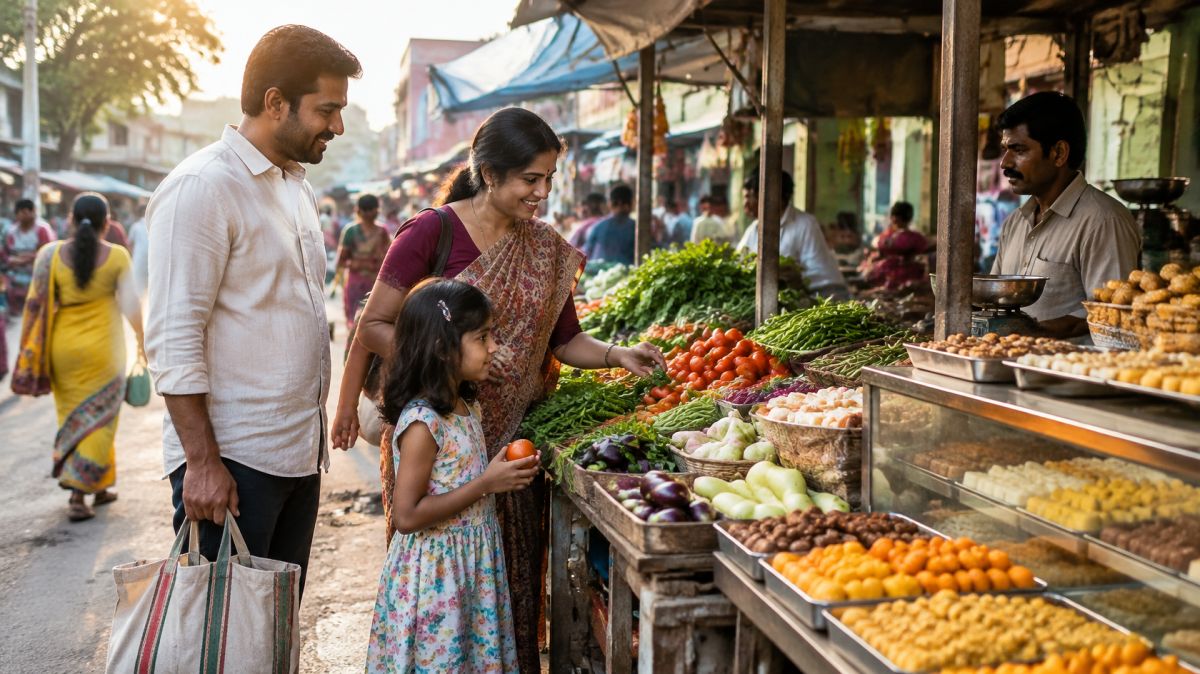
Your money keeps moving in your town
When you buy from the shop down the road, the money doesn’t stop there. The shopkeeper pays a local helper. He hires the local tempo to bring stock. He has tea at the stall next door, gets his scooter repaired at the garage at the corner, and sends his children to the school in your area. Each of those people then spends in the town too.
The same rupee goes round your town again and again, supporting many families on the way. When most of what we spend leaves the town on the first day, there is less to go round for everyone who lives here, including us.
Local shops make local jobs
Think of the people who work because a local shop exists:
- the boy at the counter learning the trade
- the delivery bhaiya who knows every lane
- the tailor’s karigar, the sweet shop’s halwai
- the woman who makes the shop’s pickles or papad at home
- the local electrician, carpenter and painter the shop calls
For many young people in smaller towns, a local shop is their first job, the place where they learn to handle customers, money and responsibility. Many of them go on to open shops of their own.
Someone who knows you
A local shopkeeper is more than a seller. Over the years they:
- keep the brand your family likes, and the size you always buy
- give honest advice: “Take this one, that one isn’t good this season”
- call you when something you like comes in
- sometimes let you pay next week in a hard month
- exchange things without forms, call centres or waiting
When something goes wrong, you talk to a person standing in front of you, who cares about seeing you again.
Safer, livelier streets
Open shops mean lights, people and eyes on the street in the evening. A busy market feels safer for women, children and the elderly. When shops shut down, streets go dark and quiet early, and the area slowly feels less alive.
Markets are also where neighbours meet. You run into an old friend, catch up with an aunty, hear about a wedding. These small meetings are part of what makes a place feel like home.
Festivals feel like festivals
Lit-up markets before Diwali, the smell of sewai before Eid, rakhi stalls, kites before Sankranti, cake shops at Christmas: much of what makes festivals special in a town happens in its local market. If local shops disappear, festivals become a delivery box at the door.
Your town’s character
The jalebi you grew up with. The tailor who knows your size without measuring. The hardware shop that has the one odd screw you need. The bookshop where the owner remembers what you read. These shops are part of your town’s identity. Once a shop like that shuts, it rarely comes back.
Help in hard times
When travel stopped, roads were closed or the network was down, it was often the local kirana, chemist and sabzi wala who kept families supplied, delivered to elderly neighbours and gave credit until salaries came. Shops that are part of the community stand by it when it matters.
Better for the environment too
- Shorter trips, often on foot or by cycle
- Less packaging: loose items, cloth bags, no layers of boxes
- Seasonal, local produce that hasn’t travelled hundreds of kilometres
- Repairs instead of replacements: the local cobbler, tailor and electrician fix things
Honest answers to common doubts
“Local shops are more expensive.”
Sometimes a little, often the same, and sometimes cheaper. Compare the full cost: no delivery charge, no minimum order, easy returns, and no waiting. Many shops will match a fair price for regular customers if you simply ask.
“They don’t have enough choice.”
Tell the shopkeeper what you want. Most will order it for you, and many start stocking it if a few customers ask. Your request shapes what your town’s shops carry.
“I don’t have time to go to the shop.”
Many local shops now take orders on WhatsApp and deliver in the evening. Ask your nearby shops for their WhatsApp number and save it.
“The quality isn’t guaranteed.”
A local shopkeeper’s reputation depends on you coming back. If something is wrong, you can show it to them in person and get it fixed the same day.
How to find local businesses near you
- Ask neighbours and your society group. The best local businesses are usually known by word of mouth.
- Look on Google Maps for the kind of shop you need, and read the reviews.
- Browse local listings by city, such as the mainbhionline marketplace at mvid.cards, where businesses are checked before they’re listed.
- Look beyond shops: home bakers, tiffin services, tailors, mehendi artists, tuition teachers. Many great local businesses work from home. Read how home businesses get started.
10 easy ways to support local shops
- Buy one thing a week locally that you would otherwise have ordered online.
- Leave a Google review for shops you like. It takes a minute and helps new customers find them.
- Recommend them. When someone in your society group asks “Any good tailor nearby?”, share the number.
- Save their WhatsApp number and order from them when you can’t go out.
- Pay on time, and by UPI if that’s easier for them. Clear udhaar promptly.
- Shop in your local market first at festival time, before searching online.
- Get things repaired locally: shoes, clothes, electronics, furniture.
- Choose local for events: sweets, catering, decoration and gifts for birthdays, weddings and office functions.
- Be kind to shopkeepers. Don’t bargain harshly over small amounts, and say thank you.
- Help a shop get online. If you’re good with phones, help a neighbourhood shop set up its Google Maps profile or WhatsApp Business. It may change their business.
For the five habits that help most, in detail and with words you can use, see 5 small ways to support your local shops.
Try a 4-week buy-local challenge
Changing habits is easier with a small, clear plan. Try this for one month, alone or with your family or society:
- Week 1, notice: write down everything you order online or buy from big stores this week. Next to each item, write whether a shop within 2 km sells it.
- Week 2, switch three things: pick three items from your list and buy them locally instead: maybe your atta, your child’s stationery and a gift.
- Week 3, save numbers: save the WhatsApp numbers of five nearby shops: kirana, chemist, sabzi wala, tailor and a sweet shop. Place one order on WhatsApp.
- Week 4, give back: leave Google reviews for three shops you like, and recommend one of them in your society group.
At the end of the month, look at what changed. Most families find it easier than they expected, and the shopkeepers start knowing them by name. If your society does it together, share what you found in the group; it often brings new families to shops they had never tried.
For societies, schools and offices
- Resident societies: keep a list of trusted local businesses for residents, and invite local shops to a festival stall day.
- Schools: order uniforms, books and event supplies from local businesses where possible.
- Offices: use local caterers, sweet shops and gift shops for staff events and festival gifts.
- Temples, gurudwaras, mosques and churches: source festival supplies from the local market, and announce local businesses’ services.
For young people
You can make a real difference to the shops you grew up with. Help them take good photos, set up WhatsApp Business, make an Instagram page, or reply to reviews. Many older shopkeepers just need someone patient to show them once. It’s also a great way to learn about business yourself.
Buying local doesn’t mean never using an app. It means remembering the shops that are there for you, and choosing them when you can.
This guide is general information to help local shops. It is not professional advice.
